Browsing Category

Asia

Activities Asia Eco Tourism Sri Lanka

Sri Lanka’s Turtle Hatcheries: Why we arrived excited and left early & disappointed

April 1, 2017

Both Nathan and I are suckers for sea creatures.  From getting excited about spotting the tiniest little nudibranch whilst out on a dive to watching gigantic blue whales breach the surface of the ocean – we love it all.

It makes sense then that when we decided to come to Sri Lanka, a visit to a turtle hatchery was top of my list – I’d seen photos from friends and it sounded magical.

In my head I had imagined dozens of little baby turtles, tottling off down the shoreline, destined for the great blue and a life of freedom.  Sounds amazing, right?

I’d almost certainly over-romanticised the experience but in I went, hoping for a once-in-a-lifetime encounter for this animal lover.  What I left with was anything but.

The Writing Was on the Wall

From the moment I walked into the facility, I knew I’d probably made the wrong choice in visiting.

Dozens and dozens of babies were smooshed into a relatively little round tank and though I didn’t love it, it was easy enough to look past it when we heard that at most they would be there for three days before being released into the wild.

*Keep breathing Sarah, it’s not so bad*

Then we were invited to pick the babies up – again, I reconciled myself – with so many babies in the tank, chances are each one would only be held once before it finds its way to freedom (plus they’re so little, it’s easy to support them whilst holding them for a second or two).

And let’s not forget – they’re crazy cute!

*Okay, this is good*

… but that was where the positives stopped and the feeling of guilt started to set in.

We moved onto the next tank where a single adult turtle swam back and forth, back and forth, along the same far edge of the tank.

Would he ever be returned the the wild?  No, were were told – he was being held there to educate visitors.

Would we like to hold him?  You can take him out of the water and pose for photos, we were told.

It was at that point that the switch flicked for me.

This poor turtle must be picked up and passed around dozens of times throughout the day and when he’s not being shuttled from tourist to tourist for their next Instagram shot, he’s left pacing back and forth in his far-too-small tank, a sure sign of boredom.

Don’t get me wrong, I love Instagram as much as the next person (check us out if you’re not already!) but no photo should be at the expense of an animal’s wellbeing.

I’m not sure if things actually got worse at that point or if I had just decided that I didn’t want to be there anymore but from then on we saw more fully-grown turtles in tanks that were obviously too small for them and our ‘guide’ who was meant to be giving us a tour of the hatchery disappeared only to return to look over our shoulder.  We had hoped that we might have learned more about the work they were doing there, especially considering the 1,000 Sri Lankan Rupees we’d each paid (USD7 per person) for a guided tour but it wasn’t to be.

The feeding tank housed turtles for three hours a day (where unsurprisingly they spent time eating) but with three fully-grown turtles in the tank, there was very little room for movement.  Another tank housed one of these gentle giants in a space that was barely twice as wide as him.

Though I know the work they do here generally helps the turtles, we couldn’t help but feel sorry for the adults left behind – what kind of a life is that?

The offer was made to release a baby turtle into the ocean at an additional charge.  This was what I’d really come to do but suddenly as we stood there, we just knew we weren’t comfortable handing over any more money (1,500 rupees per turtle) to support this centre.

Photos online had shown dozens of turtles heading out to sea at once, each of them presumedly having a fair shot at survival.  The reality of sending two lone babies out into the ocean just didn’t feel the same – it’s a big world out there for two littlies by themselves.

Conservation Work?

Opened in 1996 to help promote responsible tourism, the turtle hatchery aids conservation by buying the turtle eggs from fisherman. This goes a long way towards discouraging them from selling the eggs…

Koggala Experience

Each night, when the sun goes down and the turtles have laid their eggs safety, locals dig them back up again.  We were told that in the past, men would sell turtle eggs to villagers that would eat them but thanks to the hatcheries buying them at an inflated rate, this is no longer an issue.  These eggs are now hatched, allowed to grow for approximately three days before tourists pay to set them free.  Thankfully any turtles that are not ‘purchased’ are released after hours by the hatcheries so of course the vast majority do make it into the ocean.

Though hatcheries aim to support turtle conservation, the benefits of their work have not gone unquestioned.  By removing and relocated the eggs, the gender of the babies can be affected (as the temperature plays a significant role in the gender outcome of eggs).  Allowing the babies to grow in captivity can also be detrimental to their overall chance of survival.

When the turtles hatch in their natural habitat, they head for the sea and swim for 48 hours non-stop, passing areas where most of their predators are. “But when they are hatched in simulated environments, they are put into tanks in which they swim for 48 hours. As a result when they are released into the sea later, they do not have the strength to swim past their predators and hence become easy prey.”

Upali Padmasiri, Wildlife Department Assistant Director

Final Thoughts

To be honest, both Nathan and I left feeling guilty and disappointed.

Though I don’t doubt that setups like this obviously work positively in their conservation efforts, this felt more like a way to make money off incoming tourists than as a genuine means of turtle protection.  For us, it wasn’t so much about the cost of entry as the conditions that the adult turtles were kept in – we would have happily have paid twice the price had it been clear that funds raised were being reinvested into the centre to provide better homes for the turtles.

We visited hoping for a once-in-a-lifetime experience with Sri Lanka’s turtles but unfortunately left with a reminder that generally animals are better off left in the wild.

I know some friends have had amazing visits so it’s possible that we were just unfortunate in our choice of hatchery?  Maybe our expectations are different?  I’m not sure what to make of it but there is one thing I do know…

At least for us, we’ll stick to spotting turtles in their natural habitats.

If you would like to see turtles in the wild, they love riding the waves at Dalawella Beach.  We found half a dozen of so directly out from the rope swing.

This post is of course in no way affiliated with anyone and our thoughts are entirely our own.  Should you wish to visit (or avoid) this hatchery, it was the Sea Turtle Conservation Project & Hatchery, Koggala that we visited.

Have you been to visit the turtles in Sri Lanka?  If so, we’d love to hear of your experience and thoughts!


Unfortunately our visit to a Sri Lankan turtle hatchery was anything but what we'd hoped for.  Find out what you need to know before deciding whether or not you too want to visit. Unfortunately our visit to a Sri Lankan turtle hatchery was anything but what we'd hoped for.  Find out what you need to know before deciding whether or not you too want to visit.

Accommodation Adventure Asia Eco Tourism Mid-Range Sri Lanka

Adventure & Glamping in Sri Lanka – Not Your Average All-Inclusive!

March 29, 2017
Borderlands - Adventure glamping in Sri Lanka

An easy drive from Colombo you’ll find Borderlands, an all-inclusive Sri Lankan adventure camp in Kitulgala, the adrenalin-sports capital of the country.  We normally recoil at the word ‘all-inclusive’ when it comes to our travels but not this time!   Read on to find out why Borderlands should be a must-see on your visit to Sri Lanka…

It’s an amazing thing to leave a place feeling an overwhelming sense of gratitude.

You’ve probably heard about the health benefits of practicing gratitude—how it can boost your mood, help you treat others better, improve physical health, and keep stress and fear at bay. Now, here’s a little trick for how to automatically infuse more gratitude into your life: Spend more money on experiences, and less on material objects.

Real Simple – Amanda MacMillan

Gazing through the shroud of netting out into the Sri Lankan jungle, you just can’t help but feel appreciative.  If experiences are where it’s at, then this one would be hard to top.

Layer after layer of a jungle, from the closest painted in hues of vibrant green, to the last few trees silhouetted against the sky, sitting high on the misty mountain – all laid out in front of us without having to leave our bed. The call of countless birds and lizards, the buzz of insects waking up, the river racing along below us.

How fortunate were we to have spent even a few nights in paradise like this?

Borderlands is about as far from a typical all-inclusive holiday destination as it gets.  Yes, for a set rate you’ll get a roof over your head (and a million dollar view to boot!) and all of your meals included.  Also included are two adventure activities a day with fully trained guides and free WiFi.  Unlike your average all-inclusive resort though, Borderlands has an overwhelming sense of character and a jungle outlook that just can’t be beaten.

Lounging in the chill-out area, we spotted a chameleon in the first five minutes of being there and throughout the day, magnificent eagles soared back and forth.  Even if you’re not on the hunt for adventure, Borderlands is a great choice in Kitulgala – it’s the ultimate in back-to-nature adventure in the true spirit of Sri Lanka.

Our room obviously wasn’t your standard hotel room but it was perfect for the location.  With plenty of ventilation and a fan, we didn’t get too hot and there was a partial sunshade to stop the morning daylight from streaming in – we went with it though, leaving it open so we could see the fireflies and birds out in the jungle.

Attached to our room was a partially outdoors ensuite (with a hot-water shower and toilet) and his and hers hand basins.  We also had a couple of tables, beanbags, fresh drinking water, electrical outlets and lights in our room – though it wasn’t fancy, it was more than adequate.

We’ve sometimes stayed in luxurious hotels and have come away less impressed than we did from Borderlands which says a lot about our experience there.  If you’ve got a good sense of adventure, this place is for you!

Food, Glorious Food!

We arrived at Borderlands a little unsure of what to expect when it came to meals but the food on offer was absolutely delicious!  Hearty and varied, every meal was one to look forward to and served up buffet style, there was plenty to go around.

Adventure is Calling

Though you can stay at Borderlands just to take advantage of the facilities and delicious food, we recommend you book in the full package including activities.  The team is known as being the most safety-conscious in the area (they were also one of the founding companies on the Kelani river) and their care and professionalism really shone through – if there’s one company you want to be pushing your personal boundaries with, it’s these guys.

White Water Kayaking

Our first activity started very quickly with a dunk in the water!  After jumping back in the kayak (and then falling out a few more times) we started to get the hang of keeping our balance in the whitewater.  The whole experience was a blast and with a river that’s currently a grade 2, it was the perfect introduction to kayaking in this environment – the right balance of challenge and security.

Borderlands - Adventure glamping in Sri Lanka kayaking

Advanced Canyoning

Having been on an amazing canyoning trip once in the past we had high expectations from this activity!  Did it stack up?

We started with a hike down to the canyon though gorgeous tea plantations and farmland, our guides stopping to show us a range of local produce (with a few tastings thrown in too).  Once we made it to the river, we received a full safety briefing and made our way to the first obstacle, as double rock slide into the cool water below.  After slipping and sliding down a few rocks we approached the first of our cliff jumps… at approximately 12m high, we decided to save it for the braver souls amongst us and scrambled down the rocks instead.  With another smaller jump (which was much more to our liking) and an abseil our canyoning adventure was almost over.

We had a great time up the canyon with our two guides (we weren’t kidding when we said Borderlands was safety conscious) but wished the experience was a little longer.  Considering they’re making use of the natural environment only 10 minutes from the campsite though, it’s a fantastic introduction to canyoning.

Mountain Biking

From a fitness point of view, mountain biking made the other two activities feel like a walk in the park.

I can’t even recall the number of times I mentally chanted this saying back to myself as we kept pedalling up that mountain…

“That which does not kill us makes us stronger”

– Nietzsche, 1888

Fortunately, our lovely instructor foresaw what was to come and had the Borderlands truck follow not too far behind us up the hill.  We made it about half way before stopping and hitching a ride with him!

At the top, we stopped for a while in an ancient cave, tried to spot the local bats and admired one of the region’s waterfalls – a gorgeous spot and a great chance to catch our breath!

With the choice of going off-road or following the path we took up, we elected to stick to the ‘road’ – better safe than sorry we decided.  With spectacular views and a comfortable pace headed back downhill, I don’t think there’s any doubt that we made the right choice.

Was it physically hard?  Yes.

Were we pleased we did it?  For sure!

Borderlands - Adventure glamping in Sri Lanka mountain bikingBorderlands is about as close to the perfect jungle experience as it gets.  Tropical and wild whilst retaining a touch of comfort and calm, we really couldn’t recommend it enough to those adventurous spirits amongst us.

Leave your hair dryer at home, come with a can-do attitude and get stuck in – you won’t regret it!


Love a good adventure?  Save one of these pins!

An easy drive from Colombo you'll find Borderlands, an all-inclusive Sri Lankan adventure camp in Kitulgala, the adrenalin-sports capital of the country.  We normally recoil at the word 'all-inclusive' when it comes to our travels but not this time!  Find out why we fell in love with this unique accommodation. An easy drive from Colombo you'll find Borderlands, an all-inclusive Sri Lankan adventure camp in Kitulgala, the adrenalin-sports capital of the country.  We normally recoil at the word 'all-inclusive' when it comes to our travels but not this time!  Find out why we fell in love with this unique accommodation.

Thank you to Red Dot Tours for recommending and organising our stay at Borderlands.  As always, all thoughts are our own.

Accommodation Asia Destinations Luxury Reviews Sri Lanka

Staying on a Working Sri Lankan Plantation – Horathapola Estate

March 25, 2017
Horathapola Estate Sri Lanka review Red Dot Tours

How many hotels do you know that would check you in at 5.30am, graciously welcoming you with a fresh coconut and showing you to your room (when you don’t officially check in until later that afternoon)?

Prior to our visit to Sri Lanka, I would have said not one hotel would generally provide that level of service; I was proven wrong though.

Horathapola Estate has got you covered!

From the moment we arrived, we were treated like absolute royalty.  This boutique hotel, set on a genuine, working colonial estate is as authentic and gorgeous as they come but even with its obvious beauty, it’s the superb hospitality that stood out for us.

With 50 acres of crops and stunning gardens, it’s easy to slip into a slower pace of life.  Bird call rings out over the lush greenery as lizards and squirrels dart from one tree to another.  Life on the estate for guests is anything but hard with the staff carrying the load to ensure you won’t have to.

Dining at Horathapola Estate

All rooms at the estate come with the ‘half board’ option which includes breakfast and dinner – it’s a good thing too as meal times at Horathapola are a treat!

Their chef works hard to ensure food is prepared in a classically Sri Lankan manner, staying true to the property’s roots.  Fresh produce is taken from the plantation (including milk, rice, cashew nuts and salad greens) and cooked based on guest preferences.

Lunch is available a la carte and is fairly priced with a wide range of options available.

Touring the Estate

It’s not every day you’re welcomed onto a working plantation so we were delighted when the offer of a tour around the estate was made!

A bullock cart ride (you guessed it, that’s a cart pulled by a bull) takes guests around the expansive property, offering insight into rural life in Sri Lanka.  The unmistakable smell of cinnamon hangs in the air and countless trees bear fruit, ripe for picking – it really is a tropical paradise.

Whilst our guide explained the many different crops found on the plantation (coconut, rice, cashews, mango, pepper corn and cinnamon just to name a few) our driver raced up a coconut palm, more than happy to provide us with fresh coconut water and flesh.

On Your Bike!

Should you wish to head outside of the estate – and we recommend you do – mountain bikes are available at no additional charge.  We shouldn’t have been surprised by the quality of the bikes (we came to realise that this hotel doesn’t do things by half) but they really were heads and shoulders above what we’ve been offered in the past.

The roads around the estate are safe with locals driving slowly and incredibly patiently.  The majority of people we came across were on scooters or walking and everyone (literally everyone!) gave us a friendly beep or called out to us.  Compared to other parts of Sri Lanka, the Horathapola Estate feels a little off the tourist trail (which is fantastic news for those that visit) and though I’m not sure if the locals were excited to see us as they’re not yet inundated with tourists or if they’re just incredibly friendly to everyone they come across, it was a real pleasure being a guest in their slice of paradise for the day.

Why You Should Pick Horathapola Estate Over a Stay in Colombo

Others will tell you that although Colombo isn’t a drawcard for visitors to Sri Lanka, a stop in the country’s largest city is almost unavoidable.  Red Dot Tours are onto a winner here though, instead recommending visitors make the hour long drive out to Horathapola Estate for some serious rest and relaxation.  When I compare our stay here with the idea of contending with Colombo’s hustle and bustle, there’s absolutely no doubt that this was the right decision.

Really though, look at these photos.  Was there ever any doubt that this was the best choice?


 Skip Colombo and head straight to Horathapola Estate to unwind and experience the real Sri Lanka. Warm and welcoming staff, a stunning pool, delicious food and local tours - this working plantation is a must-see on your itinerary. Skip Colombo and head straight to Horathapola Estate to unwind and experience the real Sri Lanka. Warm and welcoming staff, a stunning pool, delicious food and local tours - this working plantation is a must-see on your itinerary. Skip Colombo and head straight to Horathapola Estate to unwind and experience the real Sri Lanka. Warm and welcoming staff, a stunning pool, delicious food and local tours - this working plantation is a must-see on your itinerary.

Thank you to Red Dot Tours and Horathapola Estate for making our visit possible.  To find out about the customised tour that Red Dot put together for us, check out our itinerary!

Accommodation Asia Destinations Itineraries Sri Lanka

Plan Your Visit to Sri Lanka! Our Two Week Itinerary

March 24, 2017

Is there any better feeling than that experienced the day or two before you head off on holiday?

That feeling of excitement as you head off into the unknown, ready to soak up new sights, experiences and cultures.

Sri Lanka’s not a place I ever thought I’d get to but later today we’ll be jetting off from Abu Dhabi and we could not be more excited!

We’re booked into the most gorgeous hotels and will be experiencing some of the island’s most unique (and if all goes to plan, memorable) boutique offerings.  After what feelings like months of planning, everything has some together and with unseasonable rain in Abu Dhabi, a holiday is certainly welcome.

If Sri Lanka’s on your wish-list or you’ve started planning your visit, this post is for you!

Getting There

Flights

A number of flights service the international airports in Sri Lanka.  The largest airport, Bandaranaike, is situated just out of Colombo  and though it’s currently undergoing renovations (which are causing significant delays), it is still the airport visitors are most likely to use.

If you are flying out of Colombo, ensure you allow additional time to check-in until the runway repairs have been completed.  At present, the runway is closed to aviation traffic between 8.30am and 4.30pm each day and the check-in recommendation has been pushed out to 5 hours (with counters closing 90 minutes before departure instead of the standard 60 minutes).

Sri Lanka looks and sounds too amazing to pass up so we certainly didn’t allow the potential delays to sway our decision to travel there – just ensure you allow enough time to get through the airport without having to worry.

The addition of a second international airport in 2013 has done little to distribute the flights through the country; Mattala Rajapaksa services the south-east coast but few airlines use it – it has in fact been labelled the emptiest airport in the world.  This makes it an unlikely option for potential tourists but I’m sure would allow for the fastest check-in in history should you decide to use one of the few airlines there!

Visa Requirements

The vast majority of visitors to Sri Lanka will require a visa to do so.  If time allows, you can apply for your visa online or, as we are going to do, you can be issued one upon arrival.  A single entry visa (for 30 days) is a little cheaper if applied for ahead of time or USD40 at the airport.

Touring with Red Dot Tours

Having worked in the past as a reservation agent for an airline and a tour guide, I get a real kick out of planning our own itineraries but with so much going on around the UAE, we didn’t have the time to organise our Sri Lankan visit to the level we normally would have liked.

We knew what we wanted to see and do near Galle but  hadn’t had a chance to lock down details elsewhere.

Enter Red Dot Tours!

Jennifer became our Sri Lankan miracle worker, putting together an amazing customised itinerary for us.  She listened intently to our requests and added her own recommendations – creating a trip that is is a perfect balance between our travel preferences and her personal knowledge of the country.

Red Dot have taken care of the majority of our accommodation for us (with the exception of Cantaloupe – two gorgeous hotels we’d already excitedly booked), our transport and many of our activities.

If like us, you’re short on planning time or would rather let someone take care of the planning for you, we can already confirm that Red Dot goes above and beyond – and we’ve not even touched down on Sri Lankan soil yet!

Getting Around

Buses, trains, tuk tuks, taxis and drivers – Sri Lanka is not short on transport.

Though maps make distances from one location to another appear short, we have been warned that traffic, road condition and mountainous conditions can make trips longer than anticipated so allow plenty of time to get around the island.

We decided to book a chauffeur-guide in for the majority of our visit.  Though the scenery from the train looks absolutely gorgeous, we’re hoping to fit a fair few activities and sights in and having a driver will allow us to do so.  We also love stopping on the side of the road when something catches our eye and a train just won’t do that!

Accommodation

We will be coming back to you with reviews of the following properties following our visit so I won’t go into specific details at this point.  We are excited by the gorgeous vistas, stunning pools and the unique offerings of these properties though (some include safaris, barbecue dinners, canyoning and mountain biking – seriously!) and are excited to discover ourselves.

Night 1:  Horathapola Estate

Photo credit: Booking.com

Night 2/3:  Borderlands

Photo: Borderlands Sri Lanka

Night 4: Cantaloupe Aqua

Night 5/6: Cantaloupe Levels

Kaetana Lanka

Night 7: 3 Sisters

Night 8:  Fort Bazaar

Night 9: Kulu Safaris

Night 10:  The Hammock Lanka

Night 11:  Mandira Dickoya Bungalow

Night 12:  Kings Pavilion

Night 13/14: Aliya Resort & Spa

Activities

All of our stops in Sri Lanka were decided based upon the activities and sights that we wanted to enjoy.

Snorkelling, scuba diving, whale watching, canyoning, visiting a turtle sanctuary, hiking Adam’s Peak, leopard spotting whilst on safari, touring a tea plantation, checking out both religious and ancient monuments and more; our visit to Sri Lanka is full of adventure, nature and local culture.

It’s perfect for us!

For us, one of the big appeals of this beautiful country is the diversity it offers.  From beach days to safaris and everything in between, there are enough activities to keep even the most active adventurer busy but there’s also plenty on offer if doing nothing is more your style.

We’re going to be dipping into both sides of the pool (so to speak) so stay tuned as we bring your our thoughts on each of the activities we have planned…

Let’s Do it…

Now, on our last morning in Abu Dhabi, our bags are calling out to be packed, the electronics are charging away and our passports are set to go.

Sri Lanka, we can’t wait to check you out for ourselves!


If you’re headed to Sri Lanka, pin your favourite images so you came come back to these beautiful hotels…

The best boutique accommodation in Sri Lanka. Avoid the crowds of tourists and check out our suggestions - from adventure to glamping to absolute luxury (plus everything in between). We've also included a travel and flight guide to make things easy. Sri Lanka, the Pearl of the Indian Ocean, offers something for almost everyone. Read our accommodation recommendations, tour provider of choice, transport guide and much more! The best boutique accommodation in Sri Lanka. Avoid the crowds of tourists and check out our suggestions - from adventure to glamping to absolute luxury (plus everything in between). We've also included a travel and flight guide to make things easy.

Activities Asia Eco Tourism Sri Lanka

Adam’s Peak: A Spiritual Awakening in Sri Lanka (with Amazing Views to Boot!)

March 5, 2017
Adam's Peak Sri Lanka

Adam’s Peak is a mountain located in central Sri Lanka (known locally as Sri Pada), the mountain is famed for the “sacred footprint”, though who the footprint belongs to will differ depending on your religion.

Buddhists believe the footprint was left by Buddha, Hindus claim it belongs to Lord Shiva whilst Muslims and Christians consider it to be Adam’s first step on Earth, once he was exiled from the Garden of Eden.

For many people, climbing Adam’s Peak is a religious experience or pilgrimage important to their faith and beliefs. For us, we were eager to see the footprint, experience the pilgrimage alongside locals and check out the view.

Riddled with injuries and very little sleep we arose (at a time we would normally be heading to bed) to prepare ourselves for our climb – we. We meet a couple of friends in Nallathanniya, a small village at the base of Adam’s Peak and with our backpacks filled with water, some extra layers of clothes, and the essential roti to see us through our journey, we began, racing to the summit before sunrise.

As we trekked along, cold and barely awake in the darkness of night, we stumbled past closed stalls and market places until we hit the starting point of the stairs. There we were greeted by several Buddhist Monks who tied cotton thread around our wrists as a blessing and protection for our journey.  Experiences like this are what travel’s all about!

As we gazed into the darkness, all we could see were lights illuminating stairs and with the end nowhere in sight (and reconsidering our choice) we gingerly started our climb. As we trekked up the stairs (roughly 5,200 of them), we were thankful for the benches and tea-houses scattered up the mountain – not only did they provide us with a place to catch our breath and give our legs a break from the crumbling stairs, they gave us the opportunity to people-watch. At one point, after watching several 60 year olds and a local with no shoes on wizz past us, we realised we still had a decent climb to go and hit the path again.

After what seemed to be eternity, we found ourselves only 500 hundred steps from the top.  Safe in this knowledge and with some time to kill, we settled into a tea hut with a cup of tea, before making the final climb. The last 500 steps were slow but we made it to the top and met the temple housing the “scared footprint”.  After a wait and a brief two second look at the footprint, we unanimously voted, whatever the engraving or mark was, didn’t look like a footprint to us!  As we battled with the hundreds of others at the summit for a place to view the sunrise, we suddenly realised the temperate had dropped and were thankful for the extra clothes we brought.  I layered up to watch the sunrise, taking in the sights and sounds around me.

Although there was too much cloud, causing us to miss the sunrise and the famed shadow of Adam’s Peak, it was an amazing experience and worth the walk. The walk down was much faster and it was surreal to see the beautiful scenery we had missed in the dark. As we reached the bottom, a sense of accomplishment passed over us and, once we got our first glimpse of the peak at the bottom, we were surprised by just how large it looked.

If you’re off to Sri Lanka, I would highly recommend Adam’s Peak.  It’s a great hike and with the locals making their pilgrimage, it makes for a unique and memorable experience.

What You Need to Know

How to get to Adam’s Peak

Most people take the Dalhousie route (also known as the Hatton route). Hatton is a major town which is accessible by bus and train. Dalhousie (a small village) is easily reached by bus, car or tuk-tuk and is around an hour’s drive from Hatton. Alternatively there is a less trekked route to the summit of Adam’s Peak – it takes longer hence being less traveled and it starts in Ratnapura.

When to go

Pilgrimage season is between December and May – during these months the path will be well-lit and there will be several tea houses open where funnily enough, you will be able to get tea (as well as water and some also offer light snacks). Outside of the pilgrimage season it’s still possible to make the journey, only it will be depended on the weather, and you will have to be a little more prepared with torches and food, as the huts and lights won’t be operational.

How long does it take?

Depending on your fitness level, the amount of people on the track and the conditions on the day, it can take anywhere between two and a half and four hours to get to the top. Try to ensure you reach the peak before sunrise to watch the shadow of Sri Pada emerge as a reflection in front of you .

Top Tips to Make the Most of Adam’s Peak:

  • Check for local celebration days (poya days), as these times become extremely busy with people choosing to make their pilgrimage, making it an extremely slow journey with long waits to reach the top.
  • Take something warm for the top as it’s cold up there and depending how fast you reach the summit, you could be waiting a while for sunrise.
  • Pack a rain jacket as it rains often!
  • Book a nights accommodation in Dalhousie (there are many options for budget guest houses) so you can get a little sleep before the trek.
  • Start your trek around 2am to see the sunrise – you want to give yourself the very best chance to see it.

Looking for other ideas for Sri Lanka?  Check out my itinerary here!


If you enjoyed this post, be sure to pin it for future reference…

Adam's Peak, Sri Lanka - Is it worth hiking to the summit? Adam's Peak - Your guide to the best view in Sri Lanka


Accommodation Activities Asia Back Packing Destinations Historical Sites Itineraries Sri Lanka Travel

Finding Our Way Around Sri Lanka… A Nine Day Guide to Paradise

January 31, 2017
9 day Sri Lanka Itinerary

Headed to Sri Lanka?  If so, snuggle up on your sofa and dig into Sarah’s post – it will give you all the basics you need to plan your trip and then some!  It’s a beauty of a post and will help ensure you maximise your time on this island paradise.  Happy planning!

I find sometimes the best trips, are the ones that allow for flexibility.  These trips generally require you to have a little more time and a little more patience especially when you run into challenges (because, really, who knows if you’ll find suitable accommodation for the night?) but they do always seem a little more rewarding.

Sri Lanka was no different – a friend and I packed our backpacks with a vague plan in place, a nights accommodation booked at the start (and two nights at a beach resort towards the end of our stay) and we hit the road.  Other than our lonely planet guide book, and our good attitudes we had nothing else planned or booked, and it was the best nine days full of laughter and exploration!

Sri Lanka is absolutely stunning, as are the people, who are definitely some of the friendliest and most helpful people I have encountered throughout my travels.  Sri Lanka holds everything a traveler desires – natural beauty that dramatically changes throughout the country, diverse culture, an interesting history and some beautiful historical monuments.


A Nine Day Sri Lankan Itinerary

  • Day One: Arrive in Colombo early morning, transfer to Kegalle to spend the day at the Elephant Freedom project & spice gardens.
  • Day Two: Bus to Kandy.  Sightseeing + Kandyan dancers & drummers
  • Day Three: Day trip to Sigiriya Rock & Dambulla Caves + overnight at Adam’s Peak
  • Day Four: Adam’s Peak Pilgrimage + drive to Nuwara Eliya and Ayurveda
  • Day Five: Bike ride around the tea plantations and train ride to Haputale
  • Day Six: Lipton’s Seat and a tour of the Dambatenne Tea Factory.  Overnight in Tangella
  • Day Seven: Beach Day!
  • Day Eight: Beach Day and then bus to Colombo
  • Day Nine: Ministry of Crab with an evening flight home.

Transport

Getting around Sri Lanka is an adventure!  Even though nothing is really far in terms of distance, due to the state of the roads, the mountainous areas, and the lack of infrastructure it is a time consuming and at times scary endeavour.

Buses:

Buses are the typical way to get around Sri Lanka but they can be an uncomfortable, stop-start experience.  Travel on buses can differ significantly depending on the journey you are taking.

Buses around town and between villages are chaotic and completely different from riding a bus in the western world.  With local music blaring, the colourful, rickety buses cruise down one lane roads jammed-packed with as many people the bus can hold (and then some) – all sense of personal space a distant memory.  Each bus is decorated around the driver’s booth with various posters, religious items, and sometimes even a screen for the passengers to watch movies and music videos.  It can be a slow journey with no official bus stops.  Instead, passengers wave down the buses, or indicate to the drivers where they want to get off, at which point the driver will slow down and the passengers will disembark whilst the bus is still moving (which can be tricky for a traveller loaded down with luggage – good luck!)  Air conditioning is a distant memory, instead ventilation is provided through opened windows and lunch is catered by the various vendors hopping on and off the buses, selling corn and boiled eggs.  It’s a totally unique experience and is definitely the cheapest way to get around with a typical bus journey costing around RS50 (Sri Lankan Rupees) – or NZD0.50/USD0.35 depending on where you’re from.

Intercity buses are generally air-conditioned coaches that depart and arrive at typical bus stations.  The bus stations are hectic and full of people, and it can be a little tricky to locate your bus but don’t worry!  Your bus won’t leave on time, in fact it will generally sit there until they have sold all the seats, so you’ll have plenty of time to get organised.  These buses mostly use designated bus stops making the journey a little faster, and are super affordable with a 3 hour coach journey costing around RS860, (NZD8/USD5.80)

Trains:

Trains in Sri Lanka have limited routes and have been around since the British built the lines in the nineteenth century.  While they are competitively priced (at similar prices to the buses), they are far superior in terms of comfort.  Though the trains can be slower and there can be substantial delays on the lines, the views and scenery are definitely worth the wait, especially a train ride in the Hill Country.  This train runs through Kandy, Nanu Oya and Ella and whilst the weather wasn’t ideal the day caught the train, the views were every bit as spectacular as we were told to expect.

There are three different train classes, with second and third class being quite similar (the main difference being you can’t reserve seats in third class).  There are several different first class tickets you can get depending on your requirements and these tickets can be booked in advance.

It would appear that that first class tickets can get booked out fairly quickly though and as it turned out, we were more than happy with our third class tickets (which we took due to a lack of available seats at the time).  Fortunately we were traveling outside of peak season and had no issues getting a seat, so didn’t experience the overcrowding on the train which we’d heard can be less than desirable (not everyone ends up with a seat in these cases!)

Tuk Tuks:

Our favourite type of transport (and the most popular type of transport for short journeys), tuk tuks are readily available and can be a novel way to get around.  Make sure to negotiate your price before embarking on your trip as some drivers can and will overcharge you – don’t be scared to bargain with the drivers and if you aren’t happy with the price try the fifty or so other drivers waiting close by.  In general tuk tuks charge around RS50/kilometre, and in Colombo the tuk tuks are metered to ensure a fair fare.

Drivers and Cars:

This option is increasingly popular due in part to how frustrating the transport system in Sri Lanka can be.  You can hire a driver and a car for a one off journey or for your entire trip.  Hiring a driver makes your journey flexible and saves you time but be sure to negotiate as these drivers can be highly inflated – in fact for one of our trips we managed to knock over RS2000 off our journey.

Drivers that stay with you for the duration of the trip take a bit of effort to organise and prices vary depending of the quality and size of the car (and the types of accommodation you are staying in).  Many hotels will have a drivers room to accommodate your driver but if not, you will need to account for the additional cost of booking him/her a room.

Looking for a driver for your trip?  Blue Lanka Tours can help you organise your perfect trip including drivers.  Our friends used this company and though they were on the expensive side they were very happy with both the service and their trip overall.  Their driver, Roshan Liyange was knowledgeable and (in our brief encounter with him) we found him to be a very safe and thoughtful driver.


Accommodation:

Throughout our stay we stayed in various types of accommodation – hostels, home-stays, B&Bs, and beach cabanas.  Whilst the majority of this accommodation isn’t worth mentioning, the few that are we have included below.

Tangella: Palm Paradise Cabanas

Wanting a few days to relax and unwind before heading back to work made the Palm Paradise Cabanas the perfect choice.  The cabanas are set in gorgeous natural setting with a view to the ocean showing through the tropical trees and plants.  The whole area is beautiful and the cabanas had great facilities, providing a relaxing and tranquil ending to our trip.

The cabanas themselves were quite basic but very charming.  The one we opted for had no air conditioning which made it a little difficult to sleep at night due to the heat, however they had a range of options available and all rooms had several fans (plus the more modern villas and houses included air conditioning).

We were fortunate to have a cabana with views straight to the ocean and only a 200m walk to the sea.  It was so peaceful and relaxing going to sleep with the sound of the waves lapping against the beach – seriously, the stuff of dreams!

The beach itself was absolutely gorgeous – the ocean is a little rough but Palm Paradise also has a pool if you’re looking for calmer water.  Although the beach is open to the public, it wasn’t very busy and we enjoyed our time there.

Breakfast was included at the hotel and the food was fantastic!  Each day we had fresh fruit, orange juice, tea and coffee plus eggs of our choice.  There isn’t much around the hotel in terms of bars and restaurants, but the food is great at both the restaurants so there isn’t much need to venture outside of the grounds if you don’t want to.

If you’re looking for a place to unwind for a few days, Palm Paradise Cabanas could be a great option.

Colombo: Clock Inn Hostel

Clock Inn Hostel was perfect for our brief time in Colombo.  We just needed somewhere to sleep for a few hours, between our night out and heading to the airport to catch our flight.  It was a clean hostel, having several common areas and friendly staff.  Each bed had a reading light, and a locker assigned to them (which I always appreciate when staying in a hostel).

Breakfast was included but unfortunately I’m not able to comment on the standard as I slept through the allocated time! The only downside for some would be the unisex communal bathrooms where the wasn’t much room inside the showers to get dressed.


Activities and Sightseeing

Kegalle and The Elephant Freedom Project

Kegalle is located between Colombo and Kandy – the main reason people head to this area is to visit the famed Pinnawala Elephant Orphanage.  After doing some research on the Elephant Orphanage we decided that it wasn’t the place for us and after some more research we found out about The Elephant Freedom Project.  The EFP claims to hire Elephants from their owners to give them a chance of freedom away from the logging industry and other terrible work many elephants see on a day to day basis and though it’s not perfect, the elephants certainly get a better life than they would elsewhere.

At the project you volunteer for the day, starting your day by mucking out the elephant enclosure, before walking with the elephants in the village.  After a home cooked meal (that you’ll help prepare,) you will bathe the elephants in the river before bidding farewell to the team.

If you’re wanting to spend time with the elephants, be sure to do your research.

Kandy

Arriving at the bus station (with no accommodation booked) we headed to the tourist information located next to the train station to ask them to ring ahead to the Burmese Rest.  This guesthouse sounded unique – there monks look after the guesthouse whilst tortoises wander the courtyard.

Unfortunately the tourist information centre wasn’t able to give us their opinions on accommodation, or ring ahead to see if they had space but after negotiating a price with a tuk tuk driver, we headed there regardless to see if we could secure a bed for the evening.  Unfortunately they were undergoing restoration work and were unable to accommodate us so our tuk tuk driver whisked us off to our second choice of accommodation which thankfully had room for us.

This little expedition gave us our first glimpse of a Sri Lankan city – Kandy was bustling around the bus station and the centre of town, and we were in fits of laughter as our tuk tuk weaved in and out of traffic.  The city itself is set around a gorgeous lake and a stroll around the waters edge to the centre of town was a great way to settle in, although we were a little nervous of the monkeys darting from tree to tree!  Once in town we explored the Main Market and the busy centre, before heading to the Temple of the Sacred Tooth Relic, and attending an early evening Kandayan dance performance.

Sigiriya and Dambulla

Both of these sites are included within Sri Lanka’s ancient cities and we were disappointed that weren’t able to explore this area more due to our limited timeframe.

Sigirya is an immense rock that is thought to have once housed an ancient civilisation – it’s a beautiful site that takes around half a day to explore.  The grounds and various frescos are gorgeous and the climb to the top of the rock, though relatively steep, is manageable.

Dambulla is a rock temple that, despite its throngs of tourists, is still an important holy place.  It was an incredible site and one not to be missed.

Adam’s Peak

Adam’s Peak is a mountain located in central Sri Lanka, famed for the ‘sacred footprint’ (though just who the footprint belongs to will differ depending on your religions beliefs).  You will find this footprint in a rock formation near the summit of the mountain but to get there you will first need to trek to the top with many pilgrims and tourists.  With the mountain rising to 2,243m, it can be a challenging walk and the roughly 5200 steps will see your legs shaking at the bottom, regardless of your fitness level.

Nuwara Eliya & Hauputale

Both of these places are located in Sri Lanka’s Hill Country.  This whole region is absolutely stunning, with lush green scenery and tea plantations as far as the eye can see. The frequent fog gives the area an almost mystical feeling, but once the fog lifts you will be in absolute awe of the beauty that you find yourself surrounded by.

Both places (and the whole region for that matter) offer ample opportunities to visit tea plantations and to see the inner workings of a tea factory.  We found this experience very informative and intriguing.

In Nuwara Eliya we hired bikes from our accommodation and rode through the town sometimes referred to as ‘Little England’.  Here we biked past old English gardens and colonial houses, before hitting the tea plantations.  It would have been a tranquil and serene experience if it wasn’t for all the traffic and tuk tuks honking their horns!

We loved getting lost through the tea plantations and would have loved to explore the area more, only we had a train to catch.

In Hauputale we headed to Lipton’s Seat and the Dambatenne tea factory.  Lipton’s seat is a lookout from which Sir Thomas Lipton used to survey his land.  The 7km walk is one not to be missed – walking through the tea plantations you are surrounded by their beauty and the many tea pickers in the area.  At the end of the walk, you’ll come across a lookout – unfortunately for us though, we were meet by a valley of fog.  The walk, however, was absolutely stunning and something we would do again, regardless of the weather.

Tangella

When people think of Sri Lanka they will often think of it’s striking beaches.  Spoiled for options we decided on Tangella Beach to end our trip with a few days of relaxation.  It was a fantastic way to end our visit to this beautiful country – the beach was quiet and absolutely exquisite!  If we had more time in Sri Lanka, we would have definitely spent more time exploring the coast and the many activities it has to offer – we’d recommend you do the same.


Restaurants and Night Life

Curries are the staple dish in Sri Lanka and they are incredible – colourful and flavoursome, with huge servings, they offer great value for money.  Each curry normally comes accompanied with rice and variety of small dishes (usually consisting of spiced veggies and dhal).  You can find great curries everywhere and if you’re wanting to stay close to home, your guest house can usually serve you food if you order before a certain time.

Bake House (Kandy)

Located in the centre of Kandy this is a famed restaurant with many locals and tourists eating side by side.  Whilst the décor of the place is dated, the turnaround is fast, the dinning is pleasant and the food good.  The front of the restaurant serves as a bakery if you want to grab something for the road otherwise you can buy a good curry inside the restaurant.

Slightly Chilled Lounge Bar (Kandy)

This bar, formerly known as Bamboo Bar (some tuk tuk drivers still know it by the old name), has a great vibe and you will find it filled with both tourists and locals.  The bar has a range of food and serves standard English fare as well as a variety of other cuisines.

ll Mare (Anantara Hotel, Tangalle)

Being quite partial to good food we decided to splurge towards the end of our trip at this fine dining restaurant.  The view was gorgeous, perched on a cliff edge overlooking the ocean and beach below, the Italian menu is as authentic as the Italian manager who runs the restaurant that specialising in perfectly fresh produce.  The food is beautifully presented and delightful – we could have eaten everything on the menu!

Ministry of Crab (Colombo)

Located in the Old Dutch Hospital, this is an upmarket area, surrounded by lovely restaurants and a few shops.  Ministry of Crab is a modern eatery owned by two former Sri Lankan cricketers, and you guessed, it they serve crab.

Whilst the restaurant have other options on the menu, generally people come for the crab.  Here you choose what size crab you want (ranging in size from 500g – 2kgs), and the style you want.  It can be a messy process getting the meat out of the shells but they’ve got this covered – just prepare yourself to don a bib.

I can recommend the garlic chilli crab and the avocado crab salad (which was a combination of crab meat mixed with wasabi mayonnaise served in half an avocado).  With that said, all of the food was amazing and I would whole heartily recommend a visit if you ever find yourself in Colombo!

Floor by O! (Colombo)

We stumbled across this place as the rooftop restaurant we wanted to dine in was absolutely jammed packed and this bar/restaurant was conveniently located downstairs.  The menu is jammed packed with food from all around the world and whilst the food was good, the atmosphere was even better.  Being some of the only tourists in there, we were well looked after and almost like D-list celebrities, everyone wanted to talk and dance with us.  The DJ had the dance floor packed, spinning tunes ranging from pop to old school RnB and hip-hop.  It was an amazing night and I only wish we remembered the name of the club we visited afterwards, as this had us out until 6am with they’re great drinks and tunes!


Is Sri Lanka Really Worth a Visit?

Absolutely!  Sri Lanka is the perfect mix of culture and beauty.  It somehow strikes the balance between being familiar enough to suit the newest traveller, and vibrant and exciting enough to hook the most seasoned backpacker in.  Sri Lanka really does offer something for everyone and for this reason, I’d highly recommend adding it to your travel wish-list… or better still, booking your flights right away!


Headed to Sri Lanka?  Don’t Leave Without These Tips!

  • Due to old British colonial laws pubs and restaurants won’t serve alcohol between the hours of 11am and 2pm.
  • Ladies beware, it’s very hard to purchase tampons in Sri Lanka.  As these can be very hard to source, make sure you stock up beforehand.
  • Ask if your accommodation has hot water before booking as it’s common in Sri Lanka to have cold water showers.
  • If heading to the Hill Country be sure to pack a rain coat – it rains a lot.

Ready to Book?  What you Need to Know about Visas in Sri Lanka

Most people will require a visa to visit Sri Lanka but you can apply online for an electronic visa and it’s a fairly straight forward process.  They take around four days to process and cost around USD40.  To find out more information or to apply for a visa head to the official visa processing site.

Happy travels!


Love this post?  Pin it so others find it too!

9 day Sri Lanka itinerary

Asia Kathmandu Nepal

Kathmandu City Tour: Culture, Chaos & Serenity – Part 1

November 22, 2016
Kathmandu City Day Tour Exploring Kiwis in Nepal

Kathmandu is such an exciting city – full of heart and a little chaotic – it’s surprisingly easy to fall in love with.  Though we stayed in Thamel (along with every other tourist that’s ever visited Nepal), we got a sense for what this city had to offer right away and knew we wanted more so without hesitation, we booked a Kathmandu city tour.

Sadly the earthquakes of April 2015 caused massive damage to this vibrant city (though more still in the outlying areas where who villages were decimated) but the Nepalese people seem to have bounced back quickly making the country all the more worth visiting.

Are the temples the same as they once were?  In some cases, yes, but mostly not.  With that said, they need our support now more than ever – teachers and doctors from the villages outside of Nepal have had to move into the city to find work as taxi drivers and restoration teams work tirelessly in a bid to rebuild their gorgeous temples and stupas as quickly as possible.

If there was ever a country that needed your support, this might just be it.

The Basics of a Kathmandu City Tour

We spent USD30 for our driver for the day and another USD25 for an English-speaking guide to join us – at a total cost of USD55 between two of us we were more than happy.  The driver was easily booked through our accommodation and arrived promptly in the morning.

You could potentially just get the driver (though ours barely spoke a stitch of English so I’m not sure how easily we would have communicated) or try your luck with taxis but at the end of the day, I don’t think you could beat a tour like this for ease and cost.

Whether you’re planning to join a private tour (as we did) or navigate your own way, I’ve included a run down of our main stops below on our Kathmandu city tour…

Swayambhunath Temple (Monkey Temple)

Perched high above Kathmandu, Swayambhunath Temple (or Monkey Temple as it’s also known) was one of my favourite stops of the day.  Our driver got us fairly close to the top in the car which meant we had an easy walk to the top, but there is a lower access point (which involves a lot of stairs) if you’re that way inclined.

There are two sides on this UNESCO site and spread across them are a stupa, temples and shrines and a variety of small shops selling local goods.  Traditional Tibetan prayer flags flit peacefully in the wind, reminding you of exactly where you are.

As the name would suggest, the site is strewn with monkeys (which for this Kiwi, was one of the best parts!)  For the most part they’re friendly but be mindful of keeping your distance, especially if they’re with their babies – and to be safe, it’s a good idea to leave any food you have in the car.

From the Monkey Temple we made our way back down the hill into the chaos of Kathmandu and before long, found ourselves wandering the back streets, almost without another tourist in sight.  Though the damage from the earthquake was obvious in places, the majority of this area appeared to be unaffected (apart from a few posts propping up walls here and there), but I can’t help but wonder how far this resilient city has come over the past year.

Hiranya Varna Mahavihar (Golden Temple)

In the midst of Kathmandu City a beacon of gold sit discretely behind unassuming wooden doors.  Behind them, you’ll find a stunning gold Buddhist monastery.   The level of detail in this place was out-of-this-world – monkeys holding jackfruit, ceremonial bells, detailed carvings, countless prayer wheels and scripture etched into doorways – everything element was a delight for the senses.

Though it’s a relatively smell temple, don’t miss it!

Continuing onwards we wandered the streets, observing locals as they went about their daily lives.  There’s something magical about soaking up the mundane daily life of a different culture – to attempt a glimpse into what life might be like in a different country.

Exploring the Temples

At one point in time, it felt like there was a little temple around every twist and turn. Deities and bells were covered in rich red paint-powder as a sign of worship and intricate carvings covered buildings as far as the eye could see.  As beautiful as Kathmandu is still, I can’t even imagine how it must have looked before the earthquakes hit.

Like what you’ve seen so far?

Stay tuned to find out how we spent the rest of the day on our Kathmandu city tour – one of the real highlights is yet to come!


Kathmandu City Tour Itinerary must see in Nepal Exploring Kiwis

Asia Budget India New Delhi Reviews Tours

A Life-Changing Visit to the Slums of Delhi

November 9, 2016
Delhi Slum Tour PETE review

It’s funny how something as simple as walking through a city can change your perspective so significantly.  India was amazing, eye-opening and at times confronting, but I’ve never experienced anything quite like our visit to the Slums of Delhi.

Initially we were hesitant to visit the slums – the idea of walking though peoples homes felt very intrusive, especially when we considered the level of poverty that so many of these people experience.  The last thing we wanted to do was to take advantage of them or to seek entertainment by sitting in on their daily lives.

One blog turned everything around for us though – if you’ve not read it, I highly recommend you have a nosey at Andrew Roams.  The decision was made and we booked ourselves in, still a little unsure of what to expect but hopeful.

Organised by PETE (Providing Education To Everyone), local guides escort small groups through the slums of Delhi – in particular the Kathputli Colony of street performers in one of the poorest parts of Delhi, near the Shadipur Depot.  To be shown around by someone who lives in this remarkable community was a once-in-a-lifetime opportunity and one that we won’t easily forget.

For the past 60 years, this colony has been home to families of magicians, singers, painters, puppeteers, dancers, acrobats and storytellers and it is now estimated to house over 20,000 people in close quarters.

My initial trepidation quickly melted away as I found myself incredibly surprised by the slums in the very best of ways.  We were amazed by the positive outlook that each and every person we encountered shared with us – how is it possible that people with so little can appreciate life so much?

With that said, I am mindful of over-romanticising the slums.  Cramped alley ways weave their way in between the small shacks that house entire families.  The buzzing televisions and charging cellphones sit in stark contrast to the rest of the environment.  Women sit outside washing clothes and cooking meals whilst children bathe in buckets.  Goats are scattered throughout the colony and cats stalk rooftops.  Water gushes in between shacks and all manner of smells drift up and over the community.

I do not doubt that life in the slums is challenging…

But it is also clearly rewarding for its many citizens.  I’ve never met a group of people as warm and welcoming as I did that day and all for no reason other than to welcome us into their lives for a brief point in time.  Colours, beauty and kindness abound, turning any doubt I had into a distant memory.

Mothers greeted us with warm smiles, men treated us with the upmost of respect but, what will stick with me forever, were the beautiful Indian children.

Racing around, following us through the maze of alleyways, these gorgeous kids wanted nothing more than to shake our hands, high five us and, to their great delight, have their photos taken.  We took with us some snacks to hand out and though they were graciously accepted, the kids really did just seem excited to see us – even now, a month on our trip, thinking about my morning with them brings a massive smile to my face.

Some experiences affect you at your very core and our visit to the slums of Delhi did exactly that.  Humbling, eye opening and enlightening, I can’t imagine anyone walking away unchanged.

The biggest question for me is how those of us fortunate enough to have everything we need in life and more can hang onto lessons like the one I learnt that day.  It’s all too easy to slip back into old ways of thinking… to forget how fortunate we are.

I don’t have any answers but I do know that the more I travel the more I feel fortunate for what I have in every sense.  I have shelter over my head, food in my belly, all the personal possessions I could ever need, my personal safety and the ability to explore other parts of the world.

Without doubt, I am lucky, but my visit to the slums reminded me that although I’m fortunate, there’s plenty I can learn from others… there is so much more to life than what we all-too-often place importance on.


If you liked this post, please pin it!

Delhi Slum Tour PETE

A visit to the Slums of Delhi (the Kathputli Colony specifically) can be organised through PETE for a minimum donation of 750 rupees each.  The funds raised from these ‘slum walks’ gets put directly back into the community through the schools and programmes that they run – money well spent in my books.   Throughout the ‘tour’ you’ll have the opportunity to visit different artists in the community but the decision is entirely yours.  Our group of five elected to enjoy a traditional puppet show (for a small additional fee) but to be honest, the highlight of the day for all of us was simply walking through the community, interacting with the locals and gaining a small insight into their lives.  There’s no right or wrong way to go about your visit, as long as you do so in a respectful way.

For more information or to secure your spot on a tour in Delhi, get in touch with PETE.  We cannot recommend it enough – don’t leave India without connecting with its amazing people.

Agra Asia India Jaipur New Delhi

Four Nights Around India’s Golden Triangle: Plan Your Trip

November 4, 2016
India Golden Triangle Itinerary 4 nights

There are some places I’ve always dreamed of visiting – but interesting enough, India was never particularly high on the list.  It’s not that I didn’t want to visit (I’ll go almost anywhere) but there were a lot of other spots that appealed more for some reason.

With a potential four day weekend on the horizon though, India suddenly became an option for me.  After hatching a last-minute plan with my friend, Tracey, we booked our tickets and began planning.  Less than a week later, we set off for India, a little unsure of just what would greet us on the other side (though reading a guide like this beforehand would have been handy!)

The good news?  India totally surprised me!  It was only a few weeks prior to our departure that tourists were warned off wearing skirts for their own safety and we’ve all heard the horror stories of the awful things that periodically happen to women alone on late-night buses.  The truth though, is that India is a remarkably large country (which makes the likelihood of anything happening low) and all of the people that we had encounters with were nothing but warm, welcoming and pleasant – even as woman, we had nothing at all to worry about.

Both Tracey and I were pleased with our decision to head to India – the sights and sounds were unlike anything either of us had experienced before.  Though our visit was short, it was a fantastic taster to the country.

The following guide will hopefully help you plan your trip to India’s Golden Triangle too!

India’s Golden Triangle Timeline

  • Day one: Arrive Delhi early morning + sightseeing.
  • Day two: Delhi sightseeing + late train to Agra.
  • Day three:  Taj Mahal + mid-afternoon train to Jaipur.
  • Day four:  Sightseeing + Elefantastic
  • Day five:  Early morning flight.

Transport

Planes

Jaipur to Delhi on Jet Airways.  This flight was on a relatively small plane but was comfortable and unremarkable; exactly what you want a flight to be!

Trains

Though we were told by almost everyone inside of India to hire a private car and driver, we made the decision to use the infamous train system and were pleased with our decision to do so.  Not only did we save money but we got a better feel for the ‘real’ India in the process!

We were told to book only first or second class on the trains and ended up with one of each – the trains from Delhi to Agra and then Agra to Jaipur worked out at about 2400 rupees per person (NZD50 or GBP25) so not bad value considering the distance covered.  First class included heaps of food but we would happily have booked only second class had we realised just how similar everything else was.

Trying to book the tickets was a bit of a challenge in itself though – the online booking system really only works if you have an Indian phone number (which of course, we didn’t) and and for some reason the travel agents in India were adamant that there weren’t any train tickets left and that we should hire a car.  When they understood that we would not be hiring a driver suddenly tickets became available on the system and upon boarding each train, we found they were practically empty – funny that!

Rickshaws

If you decide on a self-guided tour of the Golden Triangle then rickshaws will be one of the best ways to get from A to B within cities.  Not only are they cheap and plentiful but their open nature lets you really take in all of the sights, sounds and smells around you.  Be sure to set a price before you jump in and enjoy the ride!

Subways

Though only an option in Delhi, we found the subway to be a great way to get into town from the airport and to cover longer distances in the city without the potential headaches that come from the manic Delhi traffic!  To use the subway system, buy yourself a single-ride token and make your way to the right line.  If you find yourself a little confused, you won’t be for long – we found the men to Delhi to be incredibly helpful and we were appreciative of the way they so happily assisted us, wanting nothing in return.

Accommodation

Delhi: Hotel City Star

Fairly well located, Hotel City Star is within walking distance of the main Delhi train station and not too much further to the subway station you’ll arrive in on if you catch the airport rail service.  Breakfast was pretty average but the rooms were comfortable and the hotel modern.  Be sure to ask for a room on the upper floors – we were on the first floor and ended up with a pop-up market under our window and dogs barking through the night… probably to be expected in Delhi, but not ideal!

Agra: Hotel Taj Resorts

A comfortable option nice and close to the Taj ticket office.  Located in one of the nicer parts of Agra, we were happy with our choice to spend a night here.  Breakfast was included (and adequate) but the butter chicken they served up in the restaurant at lunchtime was the real highlight!

Jaipir: Pearl Palace Heritage

By far the best accommodation we experienced during our time in India (and without doubt, the best boutique hotel I’ve ever had the pleasure of staying in) – read here about the how amazing the Pearl Palace Heritage Hotel is!

Activities and Sightseeing

New Delhi

Delhi is exactly the busy, hectic city that you imagine when you think of India but amongst the chaos, there’s a sense of beauty and plenty to be learnt.

Having read another travel blog we decided that we wanted to visit the slums and though we initially had some reservations, I look back on it now as one of the best things I’ve ever done.  We booked in through PETE (Providing Education to Everyone) with a local guide and were blown away to see just how happy they were – a life lesson on what is really important for sure.  Stay tuned for my upcoming post!

Whilst in Delhi we explored both the newer and older areas (though mostly New Delhi) by rickshaw.  India Gate, the Parliament Houses, Connaught Place, Gurudwara Bangla Sahib, the Red Fort and the madness of the Old Delhi markets, we spent our time in Delhi immersing ourselves in the madness of this huge city, awestruck by just how different to anywhere else we’d experienced.

Agra

We’d heard such mixed things about Agra and the Taj Mahal before visiting – well to be honest, let’s make that fewer mixed reviews and more negative ones!  With that said, both Tracey and I were really impressed by how gorgeous this symbol of love is in real life.  There’s not a whole lot in Agra to warrant spending more time there, but for the Taj, it’s definitely worth making the stop.

Jaipur

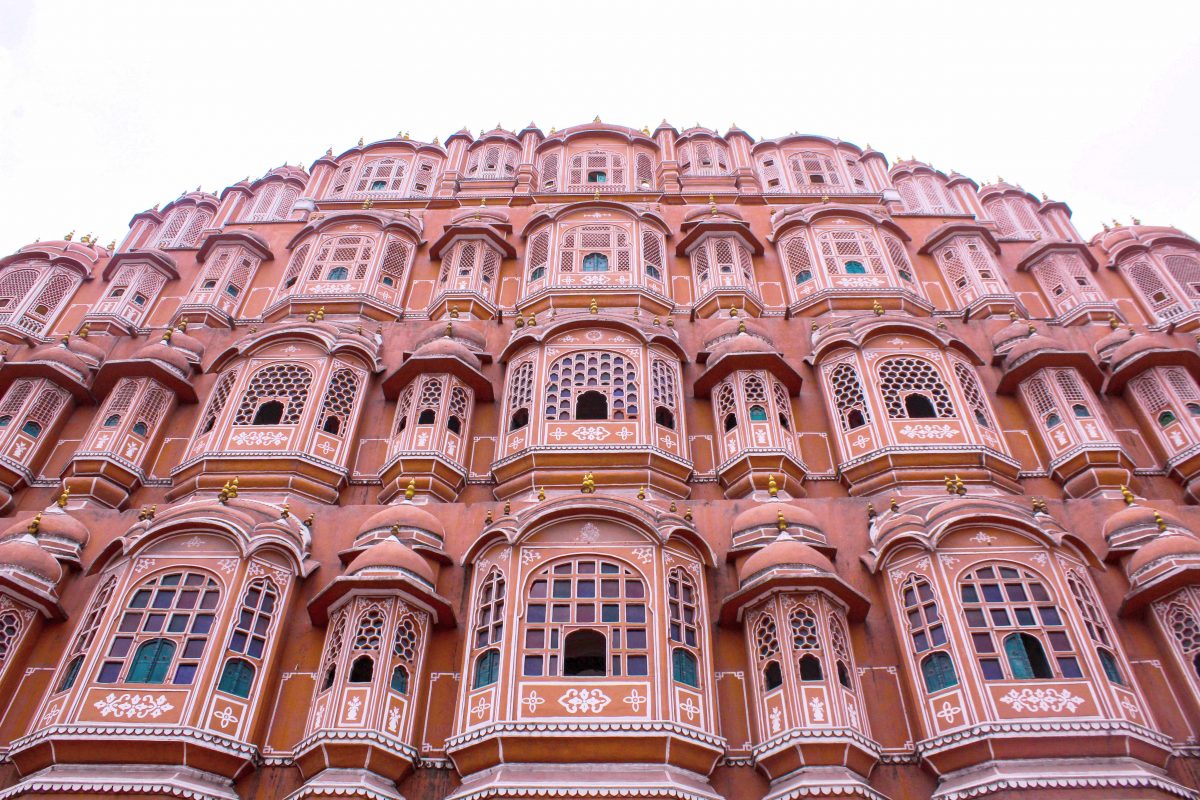
Jaipur is one of India’s cultural gems – gorgeous buildings thanks to its strong colonial ties, a more relaxed pace of life and culture in spades, it was one of the highlights of our time there.  We hired a taxi and made a quick trip into town to see the infamous Hawa Mahal (Palace of Wind) before heading out to Elefantastic.

We had planned to see and do more in Jaipur but off the back of three busy days and a lot of travelling (not to mention we were both a little tired from a full week at work) we elected to take it easy and relax a little.  Should you have more time, there’s definitely more to do there than we managed.

India is a beautiful conundrum, at times confronting, at times, full of life.  I saw poverty on a level I never have and came away with a fresh reminder of just how fortunate we are but also of what exactly is important in life.  I’m not quite sure what I was expecting but I think looking back on our flying visit, I’ll remember India for it’s beautiful people and life lessons as much as the place itself.  If you have the opportunity to visit, snap it up with both hands – even if a trip to India isn’t on the top of your list, the life lessons you’ll learn whilst there should be.

Thanks India, until next time!


Considering a trip to the Golden Triangle?  Pin this post for later!

Golden Triangle itinerary self drive India

Activities Adventure Asia Nepal Pokhara

Bungy Jumping – Everything You Need to Know for Your First Jump!

September 28, 2016

“Once you have tasted flight, you will forever walk the earth with your eyes turned skyward, for there you have been, and there you will always long to return.” – Leonardo da Vinci.

Bungy jumping.  It’s one of those things that doesn’t really ever seem to get easier – no matter how many times I jump, instinct takes over, trying to prevent me from taking the leap.  There’s no challenge quite it – nothing I’ve ever experienced that requires mind to conquer matter to the same level – but also nothing that sees you walk away feeling so elated.

Why Bungy Jump in the First Place?

The feeling of a bungy is incomparable; it’s totally different to sky diving and unlike anything you’ll experience in normal daily life.  The emotions you experience over the course of the jump vary from absolute fear to unabridged joy – it really needs to be experienced to be believed.

What Does Bungy Jumping Involve?

When you arrive at your jump site, you’ll be weighed, briefed and harnessed up.  The majority of jump sites now connect you to the bungy rope in two places – at the ankles and again by body harness and the truth is, when using a reputable provider, bungy jumping is incredibly safe.  Whilst waiting your turn to jump, your nerves will no doubt mount, culminating in the moment when you stand at the edge of the platform.  Hooked onto the bungy cord, the surprising weight of it may tug slightly on your feet but don’t hang about to think about it.

As the countdown begins, try to calm your mind and regardless of how you’re feeling, jump on the first instruction to.  Chances are, you’ll be afraid – go with it, it’s all a part of the process.

What Can I Expect from my Jump?  When the Time Comes, Will I Actually be Brave Enough to Jump?

If you put your mind to it, absolutely.  Over the years I’ve watched over a hundred people I know take the ultimate leap of faith (I used to run tours where many clients would jump) and the one thing I have learnt is that anyone who decides they want to, can.

As you stand on the edge, remember, your mind and body will conspire against you.  Chances are, you’ll second guess every desire you had in the first-place to jump and you’ll feel your bravery melt away as your nerves get the better of you.

This is absolutely normal.  Feel the fear and jump anyway.  You can do it!  Remember, the jump itself is safe, it’s just a matter of overcoming your instincts – and boy, it is worth pushing through.

Are you Crazy?

Possibly!  In all seriousness though, I love the sense of accomplishment after completing a jump.  From my very first jump (at 23 years of age) to this, my 13th bungy (and that’s not to mention the times I’ve thrown myself off buildings and dropped from canyon swings), I’ve always found them to be challenging.  Bungy jumping it the supreme example of mind over matter – though I know jumping is 100% safe, there’s always a little moment when my body resists.

Push through it though; that’s what life’s all about.

“A ship in harbor is safe — but that is not what ships are built for.” – John A. Shedd.


Need a boost of courage before you jump?  Pin this post to return to it before you book your bungy!

Bungy jumping pokhara nepal review

A massive thank you to HighGround Nepal for having us along as their guests.  You don’t want to mess around with safety when undertaking something like a bungy jump and these guys are the real deal.  Professional, friendly, supportive and fun, they take care of all the important work so all you have to do is make the final jump.  If you’re in Pokhara when they’re offering the full-moon jump, try to check it out too – we jumped during the day to check out the stunning scenery but saw the photos of the night jumps and they looked amazing!

%d bloggers like this: